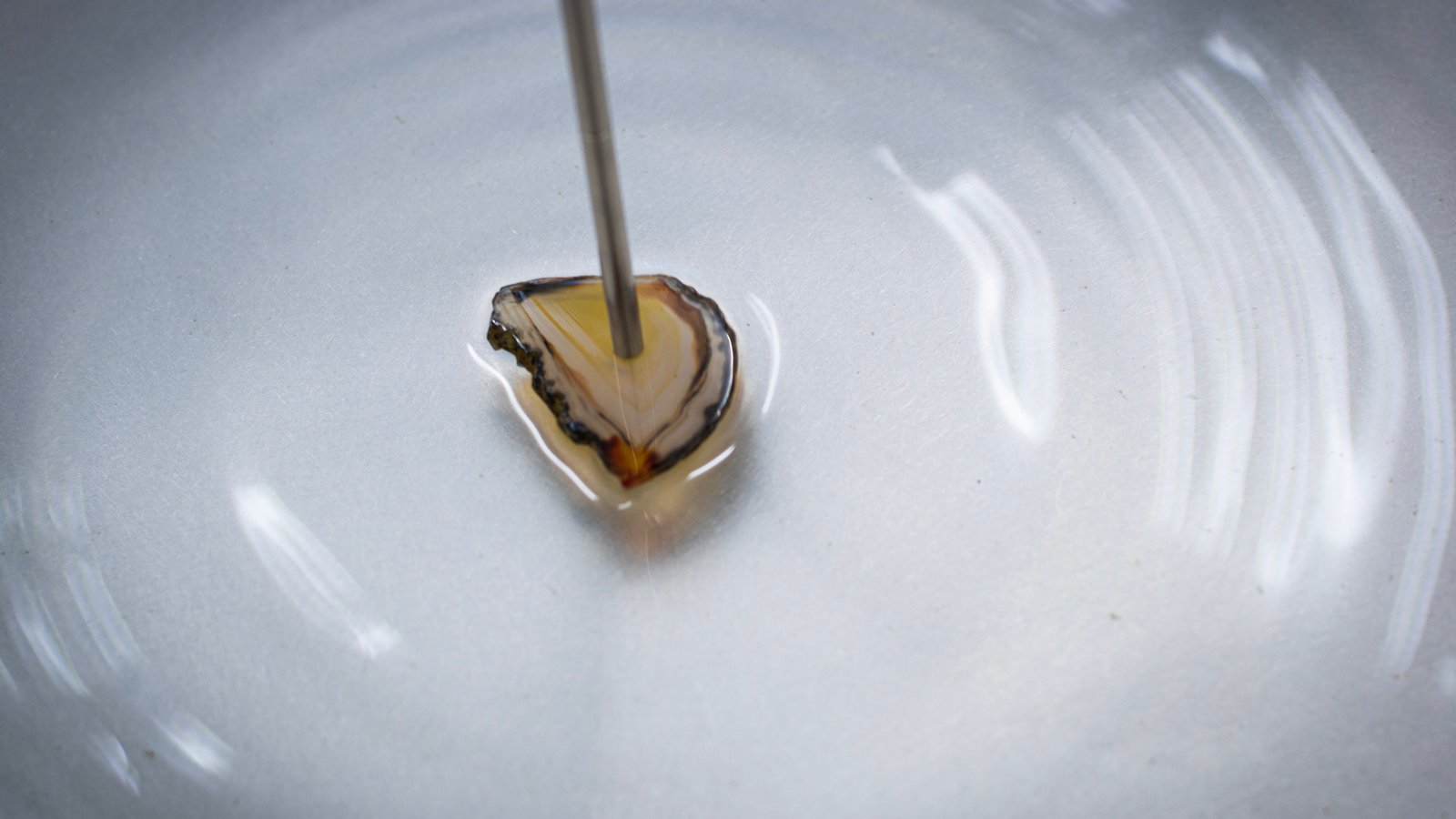
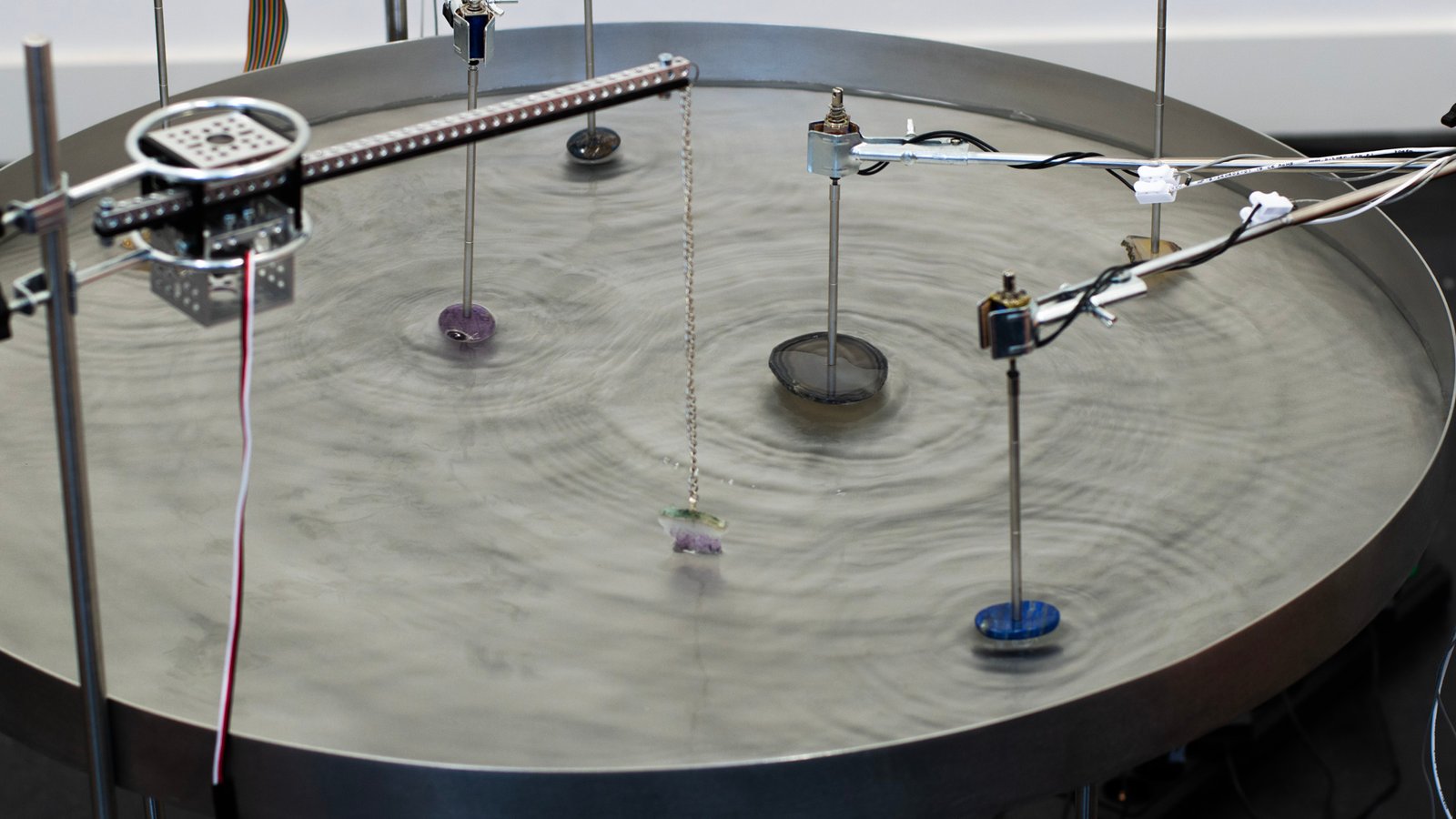
Between Water’s Moods combines artistic research, hydrological data and speculative narrative forms to create a multi-layered exploration of the changing states of water. The work takes as its starting point the Donauweibchen – a water spirit figure associated with Austrian folklore. She was believed to emerge from the river to warn humans of impending floods.
If in the past humans relied on ancient entities and myths to interpret messages from nature, today the future is increasingly read through technological ‘oracles’ and weather forecasting systems that translate water into data streams and predictions. The development of such technologies runs parallel to an increase in floods and droughts in Austria – consequences of climate change, topographical conditions and human interventions in landscapes and water cycles.
Yet it is precisely this translation into data and forecasts that creates a sense of distance. The complexity of scientific knowledge and monitoring systems often makes it difficult to form an immediate connection with nature. Between Water’s Moods addresses this disconnect and asks how water can once again be experienced as a living, tangible and physical presence. How does a body of water change when its metabolism is thrown out of balance? How can these changes be perceived through the senses?
At the heart of the installation is a machine-like oracle that translates hydrological data into physical patterns. Waves, vibrations and movements render water’s ‘mood swings’, revealing processes that usually take place beyond human perception. The patterns generated draw on a large hydrological dataset used to train forecasting systems – yet they elude purely functional interpretation. Instead of clear-cut predictions, poetic and open-ended constellations emerge, inviting interpretation by the audience.
Situated in the context of Vienna and the rhythms of the Danube, the project seeks to reactivate the collective memory of a landscape long shaped by floods, while opening an archive of possible futures embedded in the cycles of rivers.
+++
Between Water’s Moods was realised within the framework of the S+T+ARTS AQUA MOTION residency program in collaboration with TU Wien (Austria) and co-funded by the European Union.
Credits
Concept and Artistic Research: Paula Nishijima
Systems engineer and software development: Nicholas Lan
Scientific collaborators:
Institute of Hydrology and Water Management, BOKU University, Vienna, Austria:
Karsten Schulz
Martin Schmid
Institute of Hydraulic Engineering and River Research, IWA-BOKU, Vienna, Austria:
Thomas Gold
Christine Sindelar
Video documentary: Christian Prinz