
What is the role of cooperation in synthetic systems? Can a synthetic system be defined as selfish or altruistic? Is it possible to imprint a ‘cooperative marker’ into the genetic code of an organism?
Based on these questions, Paula Nishijima initiates a dialogue with the team of the Synthetic Biology and Biosystems Control Lab from the Polytechnic University of Valencia, connecting this field with its evolutionary tradition while speculating about its potential political futures.
Inspired by Robert Axelrod’s experiment The Evolution of Cooperation, Paula designs a synthetic-symbiotic tournament in collaboration with the laboratory team. Three groups of E. coli bacteria are observed, each differentiated by inserting genetic segments from other organisms. These genetic modifications enable the bacteria to express fluorescent proteins from jellyfish and corals, resulting in three distinct communities: one fluorescing green, another red, and the third orange.


In each round of the tournament, two communities are isolated together in a Petri dish, and their interactions are observed. The fluorescent markers reveal different strategies adopted by the bacteria over a two-week period. Within a diverse team of observers, interpreting these patterns prompts new questions: why is competition such a dominant framework for thinking? And what does ‘control’ mean in systems as dynamic as living organisms?
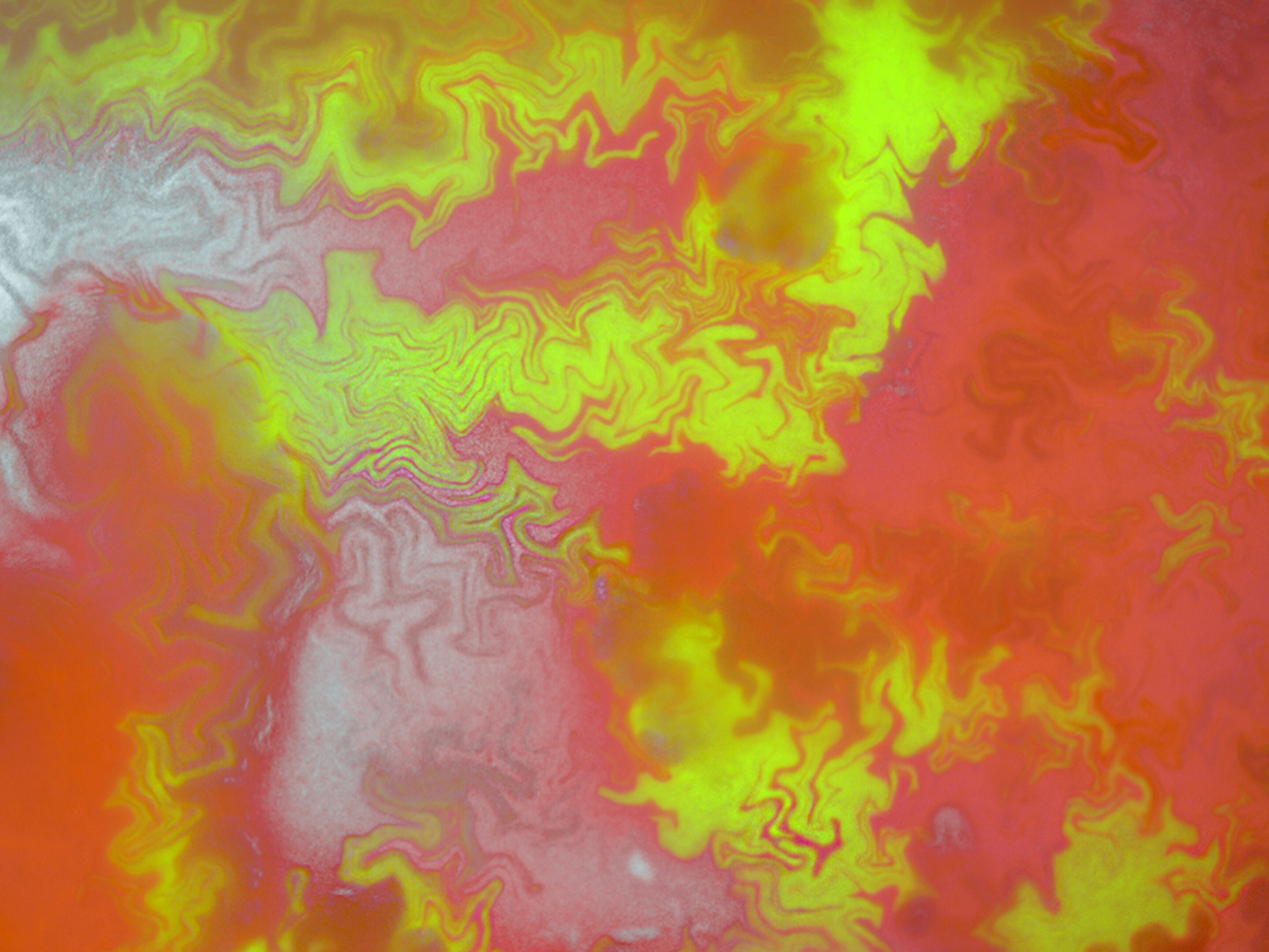
The experiment culminates in animations that simulate the interactions observed during the tournament. However, these images require interpretation. As living beings, we might see ourselves reflected in the Petri dish. Similarly, the microbial world may mirror human behaviors in our ways of living, working, and talking. The ways we interpret and describe these processes provide insights into the imaginaries that shape technological advancements concerning life itself.
Behind the initiative lies a keen interest in understanding the framework within which synthetic biology operates: how it perceives itself and its limits. Furthermore, it explores whether the relationship between biology and cybernetics addresses the tensions between the determinism inherent in informatics and the complexity and interdependence characteristic of living systems.
Text by Merlina Rañi


Watch the short video documentary about the collaboration with the Synthetic Biology and Biosystems Control Lab (SB2CL) below:
Credits
Concept and video animation: Paula Nishijima
Scientific collaborators (sb2cLab, UPV):
Alejandro Vignoni
Andrés Arboleda-García
Jesús Picó
Yadira Boada
Electronics and Control Engineer: Harold José Díaz Iza
Sound designer: Ben Tupper
Exhibition text: Merlina Rañi
Documentary: Hormiga Producciones
______________________
This project is funded by the Vice Rectorate of Art, Science, Technology and Society (UPV) thanks to the support of the Spanish Foundation for Science and Technology (FECYT) of the Ministry of Science, Innovation and Universities.